

Absorbent Glass Mat (AGM) batteries and wet cell batteries, commonly referred to as “flooded” batteries, are both part of the lead battery category. Both types contain an electrolyte solution that triggers a chemical reaction and generates electrons. When exposed to a reverse current, these batteries can be recharged. Nevertheless, due to their distinct designs, each variant has its own particular advantages and disadvantages. Therefore, it is prudent to take these disparities into account before putting them to use.
What is an AGM Battery
Absorbed glass mat batteries, or AGM batteries, became popular in the 1980s. They were used to power motorcycles, military, aircraft, and submarines, but now you can find them in everyday cars and trucks.
AGM batteries are a maintenance-free alternative to traditional flooded lead-acid batteries. They are designed to provide powerful bursts of starting amps and run electronics longer.
How do AGM batteries work
An AGM (absorbed glass mat) battery contains a special glass mat separator that wicks the electrolyte solution between the battery plates. This material’s design enables the fiberglass to be saturated with electrolytes – and to store the electrolyte in a “dry” or suspended state rather than in free liquid form.
As the battery works, the electrolyte is transferred from the glass mat to the battery plates as required. The mat contains enough electrolyte for the battery to deliver its total capacity, and – should the battery case become damaged, or the battery is tipped on its side – its electrolyte will not spill.
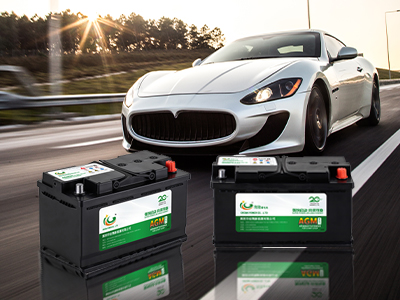
Pros and cons of AGM batteries
These batteries are called maintenance-free batteries and do not require watering service. Since there is no free liquid and minimal gassing, AGM batteries can perform better than flooded batteries in applications where maintenance is complex.
Maintenance free
Long service life
High current delivery
Extremely low-maintenance: Does not require watering service, which lowers operating costs
Can perform better than flooded batteries in applications where maintenance is complex to perform
Can be installed sideways -- electrolyte will remain inside
Users should take care when charging this battery as over, and under-charging can affect their life and performance. AGM batteries perform most reliably when limited to discharge no more than 50% of battery capacity.
Take care when charging; over- and under-charging can affect life and performance
Limit discharge to 50% of battery capacity for the best reliability
Often higher up-front cost than lead-acid batteries (often 3X+ cheaper than lithium-ion, though)
AGM batteries are often found in off-grid power systems, including environmentally friendly renewable energy systems like wind and solar power. They are also great for electric vehicle service, uninterrupted power supply systems, robotics, and some ATVs and motorcycles.
What is a Flooded Battery
Possibly the most “traditional” type of battery, wet or flooded batteries are widely used in cars, stationary (large) uninterrupted power supplies, and of course, stand-alone energy systems. These batteries contain a combination of liquid electrolytes. The liquid in these batteries must be carefully measured and maintained to perform correctly.
How do Flooded batteries work
Flooded batteries use a liquid electrolyte-containing medium to trigger a chemical reaction. When the battery is connected, acid bonds to the lead plates. This causes a reaction that sends an electric current through the attached circuit.
Pros and cons of Flooded batteries
Wet Cell batteries are typically the best for backup power applications, utility, and grid energy storage. Additionally, they are more cost-effective when compared to AGM batteries.
Extended lifespan
100+ years of improvements and proven field use
Highest ROI and lowest operating costs (50% - 90% less expensive than other chemistries
Easy maintenance
Most of the cons of flooded batteries stem from the fact that they contain free liquid that requires periodic inspection and maintenance. Flooded batteries can also be inadvertently damaged in forceful movement. Extreme climates can significantly affect the battery life because the electrolyte solution inside the battery can evaporate or freeze.
Requires periodic inspection and maintenance.
It can be inadvertently damaged in forceful movement.
Extreme climates may have a more significant effect on battery life due to evaporation or freezing.
While flooded batteries require maintenance, if taken care of properly, this type will last longer than many of its counterparts.
AGM vs Flooded Batteries - What You Need to Know
With AGM and flooded batteries, following the manufacturer's instructions for charging and maintenance is essential to secure optimum performance. If you are careful about connection processes, charging, and a safe storing environment, you are taking the necessary steps to protect your battery investment.
OREMA QTF series AGM Start-stop batteries are at the forefront of lead-carbon technology, tailored for vehicles with start/stop and mild hybrid systems. Ideal for caravans, boats, motorhomes, and more, these batteries showcase exceptional charge acceptance and cold starting capabilities. Experience the difference with OREMA's advanced lead alloy formula, specifically designed for today's demanding automotive applications.