

We all have an acute necessity for electricity on board, and a fully functional marine battery is undeniably one of the most vital components of any vessel. Regrettably, it's an inevitable reality that batteries gradually diminish in their performance over time. Eventually, you will inevitably find yourself in need of a replacement. Choosing the most suitable battery for your boat is of paramount importance. However, with the vast array of options available, making the right choice can be an overwhelming decision.
What is the purpose of your battery? Do you require a battery only for starting the boat or also for running the various power-hungry electronics onboard? Or perhaps both. According to the demand of usage, basically there are three types of marine batteries: cranking battery, deep cycle battery, and dual purpose battery.
Other basic considerations before purchasing a new battery are: battery capacity (Ah rating), battery group, i.e. battery’s physical size (make sure the battery perfectly fits in the battery box), weight (choose the battery with average weight to be able to move it in and out), output (marine cranking amp rating, reserve capacity rating, cold cranking amp rating), technology (flooded, gel, AGM, lithium-ion; gel and AGM are maintenance-free sealed batteries), warranty.
Check your owner’s manual for the recommended battery types and ratings. Substituting the recommended battery type for the other is generally not a good idea. Always choose along with the rating equal to or greater than the recommended value.
Cranking or starting marine battery: These types of batteries offer high bursts of power for short periods of time to kick over your engine and power your boat. The cranking battery sends power to the engine when the ignition switch is activated. Starting batteries are intended to put out a large amount of current for a short period of time. A cranking battery has more number of lead plates that are thinner and with more surface area to provide the necessary power.
Power or deep cycle marine battery: If you are looking to power onboard electronics and accessories the deep cycle battery is what you’ll need. A deep cycle battery puts out a smaller amount of energy for a long period of time. It can handle long discharge cycles while the engine is off. A deep cycle battery consists of fewer lead plates that are thicker to provide continuous power output over long periods of time.
Dual purpose or hybrid marine battery: It’s a hybrid battery that has been designed in a way it can be used as both cranking and deep cycle. Dual purpose batteries are sort of a blend of properties of the two. Like many 2-in-1 options, they do not always allow your boat to perform at the same level as two batteries would.
When purchasing a new battery, don’t forget to recycle your old one. Lead acid batteries can be safely completely recycled when done properly in the right facilities.
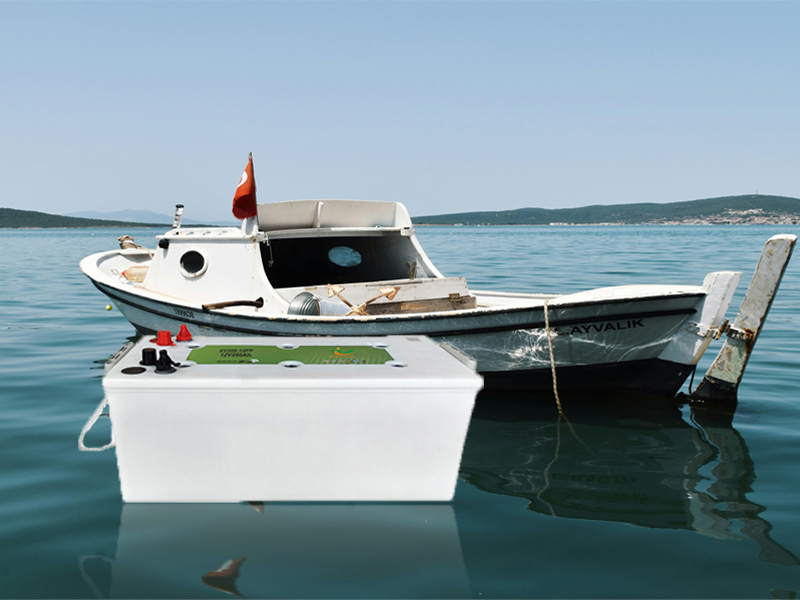
The Orema dual purpose battery presents numerous advantages in marine applications.
At the forefront, its dual-purpose characteristic endows it with remarkable versatility. It serves not only to energize the crucial systems on a boat but can also be utilized for other purposes when the need arises. This flexibility is a substantial boon as it diminishes the necessity for multiple kinds of batteries.
Regarding performance, the Orema dual purpose battery frequently offers a high degree of power output. This is of utmost importance for marine vessels that demand reliable electricity to operate navigation systems, communication devices, and other essential equipment. With its robust power delivery, it guarantees that your boat can function seamlessly even under challenging conditions.
Durability stands as another crucial advantage. These batteries are engineered to endure the harsh marine environment, including exposure to saltwater, humidity, and vibrations. Constructed with sturdy materials and advanced construction techniques, they ensure a long service life, thereby reducing the frequency of replacements.
Furthermore, Orema dual purpose battery typically come equipped with advanced safety features. This gives boat owners peace of mind, knowing that their battery is less likely to pose a risk of fire or other hazards.
Finally, some Orema dual purpose battery may provide superior charging efficiency compared to traditional marine batteries. This can save both time and energy, enhancing convenience for boaters.