

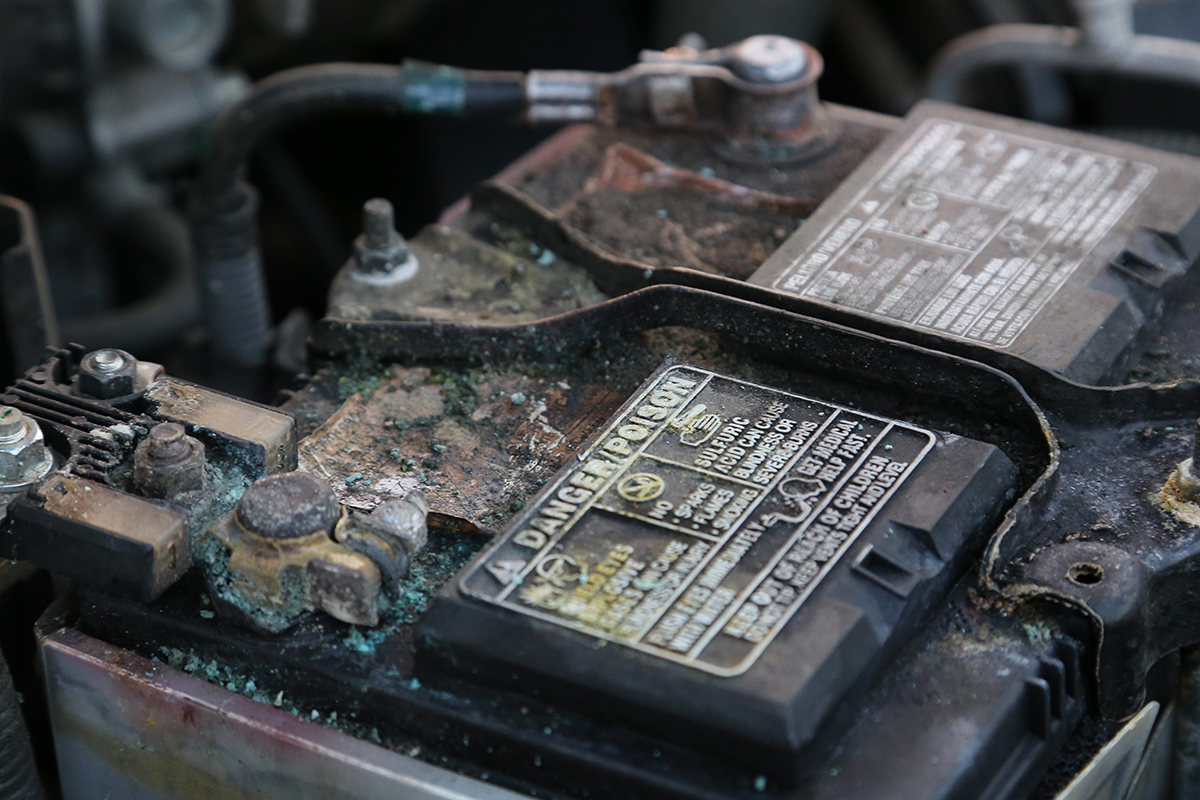
In this article, we delve into the nuts and bolts of battery corrosion-why it happens, how it affects your vehicle, and practical advice on how to clean and prevent it. By tackling corrosion head-on, you can ensure that your car remains reliable, safe, and ready to go when you are.
Steps for Cleaning Corroded Battery Terminals
Essential Supplies for Cleaning Battery Terminals
Baking Soda and Water: A simple mixture that neutralizes the corrosive buildup. The ratio varies depending on the battery size, with 1 tablespoon of baking soda to 1 cup of warm water for small electronics and 4 tablespoons of baking soda to ¼ cup of warm water for car batteries.
Brushes: A wire brush for scrubbing metal battery posts and terminals, and a plastic brush, like a nylon dish-cleaning brush or an old toothbrush, for general cleaning.
Safety Gear: Gloves made from acid-resistant materials like rubber or nitrile, and eye protection, such as safety glasses or plain sunglasses, to protect against splashes.
Clean Towel or Rag: For drying the VRLA battery and terminals after cleaning.
Cleaning Process
Safety First: Wear protective gloves and eyewear, and ensure you're in a well-ventilated area, ideally outside or in an open garage.
Disconnect the Battery: For car batteries, it's crucial to remove the negative terminal first to minimize the risk of short circuits. Use a memory saver device to maintain electronic configurations.
Prepare the Baking Soda Solution: Mix baking soda and water according to the battery size. Avoid mixing directly on the battery case to prevent accidental damage.
Apply the Mixture: Use the plastic brush to gently apply the baking soda solution, focusing on areas with visible corrosion. For tougher spots or to scrub the metal terminals, switch to the wire brush.
Neutralize and Clean: If necessary, apply additional baking soda solution to thoroughly neutralize any remaining corrosion. Then, clean the area with a damp cloth or paper towel, avoiding water contact with any vent caps or openings.
Additional Tips
Anti-Corrosion Measures: After cleaning, consider applying an anti-corrosion gel or spray to the terminals to help prevent future buildup.
Regular Maintenance: Regularly inspect and clean battery terminals to ensure optimal performance and extend the battery's lifespan.
Proper Disposal: Dispose of used materials, especially those contaminated with corrosive substances, safely and responsibly.
What Causes SLA Battery Corrosion?
Battery corrosion, a frequent concern for vehicle owners, stems from several factors that can degrade the performance and lifespan of a car battery. This phenomenon usually manifests as a discolored, crusty buildup on the terminals, with variations in color indicating different types of corrosion. The primary cause of this degradation is the interaction between the battery acid and the metal components of the battery terminals.A key factor in the development of battery corrosion is the emission of hydrogen gas, a natural byproduct of the battery's operation as it goes through cycles of heating and cooling. This gas, when released, can react with the metal surfaces near the battery terminals, leading to corrosion. Moreover, the composition of battery acid, a mixture of sulfuric acid and water, changes in acidity depending on the battery's charging state, contributing to the process of corrosion through electrolysis. This electrolysis can split water into hydrogen and oxygen, with the hydrogen potentially reacting with metal parts to cause corrosion.
The risk of corrosion is exacerbated by several conditions. The aging process of a battery is a significant factor; as batteries approach the end of their typical three-to-five-year lifespan, they become more susceptible to corrosion. External factors such as overheating, either from overcharging or ambient high temperatures, particularly during the summer, also increase the likelihood of corrosion. Physical damage to the battery that leads to fluid leaks can further accelerate this process, as leaking battery acid directly contributes to corrosive buildup around the terminals.
How to Prevent Car Battery Terminal Corrosion
Preventing car battery terminal corrosion is crucial for extending the lifespan of your battery and ensuring your vehicle remains reliable, especially in cold weather. Here's a consolidated guide on how to safeguard your battery from corrosion, drawing on effective strategies and maintenance tips.
Key Steps to Prevent Sealed lead acid Battery Terminal Corrosion
Protective Coatings: After cleaning your battery terminals thoroughly, apply a coat of dielectric grease or a specialized battery terminal protector like AMSOIL Heavy-Duty Metal Protector. These substances not only prevent corrosion but can also protect against rust when used as an undercoating for the vehicle. Available in convenient packets at auto parts stores, these protectors are easy to apply and essential for long-term battery care.Charge Management: Avoid overcharging and undercharging, as these are common causes of terminal corrosion. Corrosion on the positive terminal often indicates overcharging, possibly due to a faulty voltage regulator. On the other hand, corrosion on the negative terminal suggests undercharging, which can occur from excessive short drives where the battery doesn't fully recharge. Regular vehicle maintenance checks can diagnose and rectify such electrical issues, ensuring your battery charges correctly.
Routine Maintenance and Cleaning: Regular checks and cleaning of your battery terminals are vital. Remove any signs of corrosion as soon as they appear by disconnecting the terminals (starting with the negative to prevent sparks) and applying a small amount of dielectric grease after cleaning. Ensure the terminals are properly tightened to avoid loose connections. Incorporating a battery inspection into your routine vehicle maintenance can prevent sudden failures, especially before cold seasons when batteries are most vulnerable.
Driving Habits: Your driving behavior significantly impacts battery life. Avoid using multiple electronic devices when the engine is off to prevent battery drain. For those who use their car infrequently or plan to be away for an extended period, consider disconnecting the battery to prevent discharge. Periodic long drives are beneficial, allowing the alternator adequate time to recharge the battery fully.
Preparedness: Keeping jumper cables in your vehicle is a good practice, ensuring you're prepared for emergencies. However, by following the above steps, the need for jump starts should decrease significantly.
FAQs about Battery Terminal Corrosion
How long does it take for battery terminals to corrode?
Excessive charging of your battery may lead to overheating. This increased temperature can prompt the internal liquid to expand, leading to the escape of corrosive substances through the vent holes onto the cables. When your battery approaches its typical lifespan of 5 to 7 years, the onset of corrosion is a natural expectation.
Can corroded battery terminals still work?
Battery terminal corrosion is a significant factor that can lead to diminished battery performance and electrical issues in automobiles. The Universal Technical Institute points out that when corrosion forms on or near the battery terminals, it can introduce higher resistance in the circuit. This heightened resistance can interfere with the flow of electrical current, which is crucial for the battery's optimal functioning.
Can corrosion stop your battery from charging?
Corrosion can impede the flow of electricity from the battery to the engine and from the charging system back to the battery. This impedance can cause challenges in starting your engine and may lead to the battery failing prematurely because of inefficient charging.
Should I replace my battery if the terminals are corroded?
If your battery hasn't exceeded a lifespan of 5 years and exhibits signs of corrosion, you can remove the corrosion (details on how to do this will follow), which may marginally prolong the battery's life. Nonetheless, it's generally advisable to consider replacing the battery, as it's likely that its efficiency is diminishing.
Read More: