

Batteries are integral power sources characterized by their voltage output, yet their performance is governed by an inherent feature known as internal resistance. This resistance acts as a gatekeeper, influencing the battery's voltage delivery and overall runtime. Measured in milliohms, internal resistance is influenced by several factors, including the battery's size, its state of charge, the chemistry within, its age, the surrounding temperature, and the discharge current it experiences.
Notably, internal resistance is a common attribute across all battery types, effectively depicted in schematics as a voltage source in series with a resistor. This resistance is not static; it fluctuates based on several conditions. For instance, temperature plays a critical role: as temperature rises, internal resistance decreases, enhancing battery performance. Conversely, lower temperatures increase resistance, leading to diminished power and capacity, a typical scenario in cold winter conditions.
Notably, internal resistance is a common attribute across all battery types, effectively depicted in schematics as a voltage source in series with a resistor. This resistance is not static; it fluctuates based on several conditions. For instance, temperature plays a critical role: as temperature rises, internal resistance decreases, enhancing battery performance. Conversely, lower temperatures increase resistance, leading to diminished power and capacity, a typical scenario in cold winter conditions.
What is internal resistance of a lead acid battery
Internal resistance is the measure of opposition a battery has to the flow of electric current. Think of it as a small, invisible gatekeeper inside the battery that affects how efficiently it can deliver power. In lead-acid batteries, internal resistance is a critical factor that influences performance, efficiency, and lifespan. Factors contributing to internal resistance include the quality of materials used for electrodes (lead plates), the purity and concentration of the electrolyte (sulfuric acid solution), and the design and integrity of the separators between the plates.
What is the best internal resistance value of a lead acid battery?
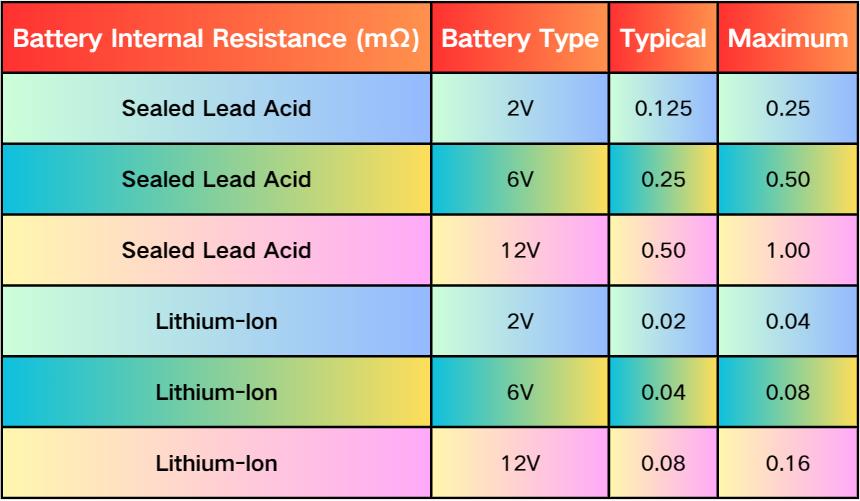
For a general-purpose lead-acid battery, the ideal internal resistance typically ranges from 0.005 to 0.015 ohms when the battery is new and in good health. This range ensures efficient energy flow and optimal performance for most standard applications, such as in vehicles or for moderate electrical backup systems.
However, for specialized applications, particularly where high-drain devices are involved, the 'ideal' internal resistance can differ:
High-Drain Applications (e.g., Inverters, UPS Systems): Batteries designed for high-drain devices usually require a lower internal resistance, often at the lower end of the 0.005 to 0.015 ohms range or even below. A lower internal resistance is crucial here because it allows the battery to deliver high currents more efficiently, which is essential for devices like inverters that draw large amounts of power in short bursts. The lower the resistance, the better the battery can handle these high power demands without significant energy loss or overheating.
Automotive Batteries: Car batteries, while also requiring low internal resistance, may have slightly different optimal values, influenced by factors like the engine start-up current and alternator characteristics. Automotive batteries need to deliver high current briefly for starting the engine and then switch to a stable low-current output for powering electronics. Their optimal resistance is designed to balance these needs effectively.
Deep Cycle Batteries (e.g., for Solar Energy Systems): In contrast, deep-cycle batteries used in applications like solar energy storage might tolerate slightly higher internal resistance since they are designed for long, continuous discharge and recharge cycles rather than short, high-current bursts.
However, for specialized applications, particularly where high-drain devices are involved, the 'ideal' internal resistance can differ:
High-Drain Applications (e.g., Inverters, UPS Systems): Batteries designed for high-drain devices usually require a lower internal resistance, often at the lower end of the 0.005 to 0.015 ohms range or even below. A lower internal resistance is crucial here because it allows the battery to deliver high currents more efficiently, which is essential for devices like inverters that draw large amounts of power in short bursts. The lower the resistance, the better the battery can handle these high power demands without significant energy loss or overheating.
Automotive Batteries: Car batteries, while also requiring low internal resistance, may have slightly different optimal values, influenced by factors like the engine start-up current and alternator characteristics. Automotive batteries need to deliver high current briefly for starting the engine and then switch to a stable low-current output for powering electronics. Their optimal resistance is designed to balance these needs effectively.
Deep Cycle Batteries (e.g., for Solar Energy Systems): In contrast, deep-cycle batteries used in applications like solar energy storage might tolerate slightly higher internal resistance since they are designed for long, continuous discharge and recharge cycles rather than short, high-current bursts.
How to measure internal resistance of lead acid battery
Measuring the internal resistance of a lead-acid battery is crucial for assessing its health and performance. There are two primary methods commonly used: impedance spectroscopy and load testing. Each method has its own advantages and is suitable for different scenarios.
Impedance Spectroscopy: This method involves applying a small alternating current (AC) to the battery and measuring the resulting voltage change. The impedance (which includes resistance) is calculated from these values. Impedance spectroscopy is highly accurate and can provide detailed information about the battery's condition, including its state of charge and health. However, this method requires specialized equipment and technical expertise, making it more suitable for professional or laboratory settings. It's particularly useful for detailed diagnostics and regular monitoring in industrial applications where battery performance is critical.
Load Testing: This is a more straightforward and accessible method, making it popular for general use. Load testing involves applying a specific load (a known electrical draw) to the battery and measuring the voltage response. The idea is simple: a healthy battery should maintain a relatively stable voltage under load, while a battery with high internal resistance will show a significant voltage drop. Load testing can be done with relatively simple equipment, such as a voltmeter and a load source (like a high-wattage bulb or a resistor). It's an effective method for on-site testing and is commonly used in automotive and backup power system maintenance.
Both methods are valuable for different purposes. Impedance spectroscopy provides a more comprehensive analysis but requires specialized tools and knowledge. Load testing, while less detailed, offers a practical way to quickly assess a battery's condition in the field. Regular measurement of internal resistance is vital in battery maintenance, as an increase in resistance can indicate aging, deterioration, or other issues that might require attention. By regularly monitoring internal resistance, battery owners can take proactive steps to maintain battery health and prolong its usable life.
Impedance Spectroscopy: This method involves applying a small alternating current (AC) to the battery and measuring the resulting voltage change. The impedance (which includes resistance) is calculated from these values. Impedance spectroscopy is highly accurate and can provide detailed information about the battery's condition, including its state of charge and health. However, this method requires specialized equipment and technical expertise, making it more suitable for professional or laboratory settings. It's particularly useful for detailed diagnostics and regular monitoring in industrial applications where battery performance is critical.
Load Testing: This is a more straightforward and accessible method, making it popular for general use. Load testing involves applying a specific load (a known electrical draw) to the battery and measuring the voltage response. The idea is simple: a healthy battery should maintain a relatively stable voltage under load, while a battery with high internal resistance will show a significant voltage drop. Load testing can be done with relatively simple equipment, such as a voltmeter and a load source (like a high-wattage bulb or a resistor). It's an effective method for on-site testing and is commonly used in automotive and backup power system maintenance.
Both methods are valuable for different purposes. Impedance spectroscopy provides a more comprehensive analysis but requires specialized tools and knowledge. Load testing, while less detailed, offers a practical way to quickly assess a battery's condition in the field. Regular measurement of internal resistance is vital in battery maintenance, as an increase in resistance can indicate aging, deterioration, or other issues that might require attention. By regularly monitoring internal resistance, battery owners can take proactive steps to maintain battery health and prolong its usable life.
How do I distinguish between good and bad 12V lead acid batteries with the internal resistance value?
Understanding the internal resistance of a 12V lead-acid battery is key to distinguishing a good battery from a failing one. Generally, a lower resistance indicates a healthier battery. A new 12V lead-acid battery typically has an internal resistance below 0.015 ohms, but as it ages and wears, this value increases. If the internal resistance exceeds 0.025 ohms, it's a sign that the battery is deteriorating and may need replacement soon.
How does increasing the plate area affect the internal resistance of lead-acid batteries?
Increasing the plate area in lead-acid batteries is a fundamental way to decrease their internal resistance. Larger plates offer a greater surface for electrochemical reactions, facilitating a smoother and more efficient flow of electric current. This reduction in resistance is beneficial for applications requiring high power output, as it allows the battery to handle higher currents effectively.
How to reduce internal resistance of lead acid battery
Reducing the internal resistance of lead-acid batteries is crucial for enhancing their efficiency and lifespan. Here are several strategies and considerations for achieving this:
Optimize Electrolyte Quality: The quality and concentration of the electrolyte significantly impact internal resistance. Using a high-purity sulfuric acid solution and maintaining the correct acid-to-water ratio can help minimize resistance. Regularly monitoring and maintaining the electrolyte level is also essential.
Improve Plate Design: The design and material of the plates greatly influence internal resistance. Thinner plates can reduce resistance but may compromise lifespan. Using high-purity lead and optimizing plate surface area can enhance conductivity and reduce resistance.
Ensure Proper Battery Charging: Overcharging or undercharging lead-acid batteries can increase internal resistance over time. Implementing a proper charging regimen that avoids extreme charging conditions helps maintain optimal internal resistance levels.
Maintain Optimal Operating Temperature: As temperature affects internal resistance, maintaining batteries within an optimal temperature range is important. This may involve insulating batteries in colder environments or providing ventilation or cooling in hotter conditions.
Regular Maintenance and Cleaning: Keeping the battery terminals and connections clean and free of corrosion is vital. Corrosion increases resistance and impedes current flow. Regular maintenance checks and cleaning can prevent these issues.
Use Quality Components and Materials: The overall quality of the battery components, including separators and connectors, affects internal resistance. Investing in higher quality batteries with superior components can result in lower internal resistance.
Minimize Ageing Effects: As batteries age, their internal resistance naturally increases. Regular testing and replacing older batteries can prevent the inefficiencies associated with increased internal resistance.
Balanced Cell Design: Ensuring that all cells within a battery are balanced in terms of charge and health can reduce overall internal resistance. A battery is only as strong as its weakest cell, so maintaining cell balance is crucial.
Optimize Electrolyte Quality: The quality and concentration of the electrolyte significantly impact internal resistance. Using a high-purity sulfuric acid solution and maintaining the correct acid-to-water ratio can help minimize resistance. Regularly monitoring and maintaining the electrolyte level is also essential.
Improve Plate Design: The design and material of the plates greatly influence internal resistance. Thinner plates can reduce resistance but may compromise lifespan. Using high-purity lead and optimizing plate surface area can enhance conductivity and reduce resistance.
Ensure Proper Battery Charging: Overcharging or undercharging lead-acid batteries can increase internal resistance over time. Implementing a proper charging regimen that avoids extreme charging conditions helps maintain optimal internal resistance levels.
Maintain Optimal Operating Temperature: As temperature affects internal resistance, maintaining batteries within an optimal temperature range is important. This may involve insulating batteries in colder environments or providing ventilation or cooling in hotter conditions.
Regular Maintenance and Cleaning: Keeping the battery terminals and connections clean and free of corrosion is vital. Corrosion increases resistance and impedes current flow. Regular maintenance checks and cleaning can prevent these issues.
Use Quality Components and Materials: The overall quality of the battery components, including separators and connectors, affects internal resistance. Investing in higher quality batteries with superior components can result in lower internal resistance.
Minimize Ageing Effects: As batteries age, their internal resistance naturally increases. Regular testing and replacing older batteries can prevent the inefficiencies associated with increased internal resistance.
Balanced Cell Design: Ensuring that all cells within a battery are balanced in terms of charge and health can reduce overall internal resistance. A battery is only as strong as its weakest cell, so maintaining cell balance is crucial.
Relationship between internal resistance and temperature of lead-acid batteries
The interplay between temperature and internal resistance in lead-acid batteries is a nuanced aspect that significantly influences their performance and longevity. At a fundamental level, as temperature increases, the internal resistance typically decreases. This reduction in resistance facilitates easier flow of electric current, temporarily boosting the battery's performance. However, this improvement comes with a caveat. Elevated temperatures can induce accelerated chemical reactions within the battery, leading to faster degradation of the materials and a shortened overall lifespan.
On the flip side, in colder conditions, the increased internal resistance can be a substantial challenge. The sluggish chemical activity at lower temperatures heightens the resistance, making it harder for the battery to deliver energy efficiently. This is particularly noticeable in scenarios where batteries are expected to provide high bursts of power, such as starting a car on a cold morning. The elevated resistance can lead to a noticeable drop in performance, reflecting in slower cranking of engines or reduced output in power applications.
Understanding the internal resistance of lead-acid batteries allows us to make more informed decisions. Knowing the nuances of the internal resistance of batteries allows us not only to choose more suitable batteries for our applications and extend the life of lead-acid batteries, but also to make our reliance on lead-acid batteries more efficient and sustainable.