

A Comprehensive Guide to Lawn Mower Battery
The lawn mower battery is vital for any electric or battery-operated mower, providing the necessary power to keep your lawn pristine. Understanding the intricacies of lawn mower batteries can significantly enhance your mowing experience and ensure your equipment operates efficiently. This guide will delve into the various aspects of lawn mower batteries, including their types, maintenance, and troubleshooting tips.
What is a lawn mower battery?
A lawn mower battery is the heart of electric and battery-operated mowers, supplying the energy required to power the motor and blades. Unlike traditional gas mowers that rely on fuel combustion, electric mowers depend entirely on batteries for operation. This shift towards battery-powered tools has made lawn care more environmentally friendly and convenient.
How does a lawn mower battery work?
Lawn mower batteries store electrical energy and convert it into mechanical energy to power the motor. When the mower is started, the battery sends a current to the motor, allowing it to turn the blades and cut grass.
The charging process typically involves plugging the mower into an electrical outlet or using a dedicated charger for removable batteries. During charging, electrical energy replenishes the stored energy within the battery cells.
How to choose the right lawn mower battery?
Selecting the right lawn mower battery involves considering several factors:
Compatibility: Ensure your chosen battery is compatible with your specific mower model.
Voltage: Check the voltage requirements of your mower; common voltages include 12V, 24V, and 36V.
Capacity: The battery’s amp-hour (Ah) rating indicates how long it can run before recharging.
Weight: Consider the weight of the battery if you need to remove it frequently for charging or maintenance.
How to maintain your lawn mower battery?
Proper maintenance can extend the life of your lawn mower battery significantly. Here are some essential tips:
Regular Charging: Always charge your battery after use to prevent deep discharging, which can damage it over time.
Clean Terminals: To keep the battery terminals clean and free from corrosion, use a mixture of baking soda and water.
Store Properly: If you plan on storing your mower for an extended period, ensure the battery is fully charged and store it in a cool, dry place.
Check Water Levels: Regularly check and top off water levels with distilled water if necessary for lead-acid batteries.
Troubleshooting common lawn mower battery issues
You may need help with your lawn mower battery even with proper maintenance. Here are common problems and their solutions:
Battery Won’t Charge? Check if the charger functions correctly and ensure all connections are secure. If problems persist, consider replacing the charger or consulting a professional.
Short Run Time? If your mower runs only briefly before needing a recharge, it might mean the battery’s capacity has diminished, or you haven’t fully charged it.
Corroded Terminals? Clean corroded terminals immediately using a wire brush or baking soda solution to ensure proper electrical contact.
Can I replace my lawn mower battery myself?
Replacing your lawn mower battery is usually straightforward if you follow these detailed steps:
1. Safety First: Ensure your mower is turned off and unplugged from any power source before starting work.
2. Remove Covers or Panels: Depending on your model, you may need to remove any protective covers or panels that shield the battery compartment. This may involve unscrewing screws or unclipping plastic tabs.
3. Disconnecting Old Battery:
Identify the positive (+) and negative (-) terminals.
Carefully disconnect the negative terminal first using an appropriate wrench or pliers.
Next, disconnect the positive terminal.
Remove any mounting brackets holding the old battery in place before lifting it out.
4. Installing New Battery:
Place the new battery into position.
Connect the positive terminal first by securing it tightly.
Follow with connecting the negative terminal.
Ensure all connections are snug, but avoid over-tightening, which could damage terminals.
5. Reassemble the Mower: Replace any covers or panels removed during disassembly before testing your mower’s functionality.
6. Test Your Mower: Once you reassemble everything, turn it on to ensure it operates smoothly with the new power source.
What should l do if my lawn mower won't start?
If your lawn mower won't start, ensure the battery is charged andproperly connected.Also, inspect for loose wires or corrodedterminals.
How often should l replace my lawn mower battery?
Most batteries should be replaced every 3-5 years, depending onusage and maintenance practices.
Can luse my lawn mower in wet conditions?
It's best to avoid using electric mowers in wet conditions, asmoisture can damage electrical components and pose safety risks.
Is it safe to leave my lawn mower plugged in all night?
Leaving your lawn mower plugged in overnight can be safe if youuse an automatic charger to prevent overcharging: however, alwaysfollow manufacturer guidelines.
What is deep discharging?
Deep discharging happens when you drain a battery below itsrecommended voltage level, which can cause permanent damageand reduce its lifespan.
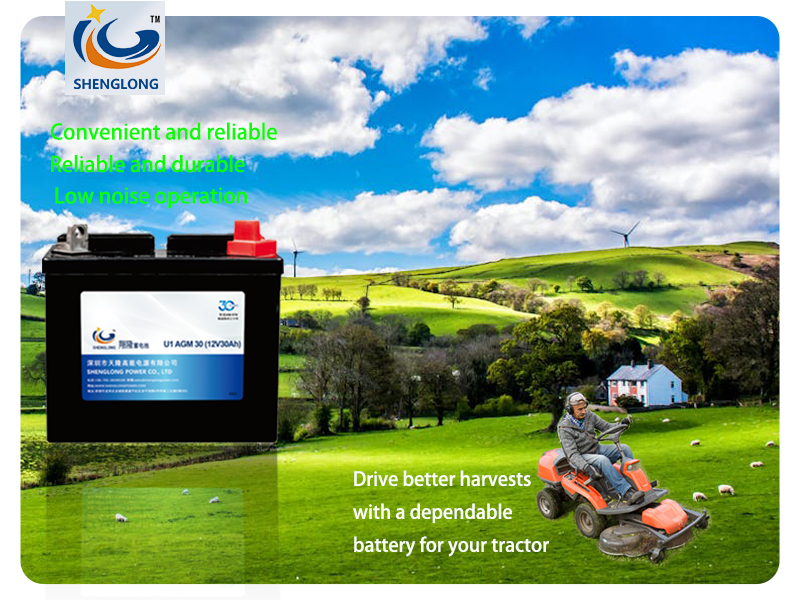
SHENGLONG motive power Industrial batteries stand out as a premier choice. These batteries offer a seamless combination of high-performance power supply and exceptional durability. The Tractor & Garden Machines Battery, in particular, is a remarkable offering. Specially designed for tractors and garden machines, it is engineered to endure the rigors of heavy-duty equipment. With its robust construction featuring thick plates and sturdy connections, it provides not only reliable power but also long-lasting durability. This makes it an ideal choice for use in rugged terrains and harsh conditions where other batteries might falter. It truly is a testament to innovation and quality in the field of power solutions for specialized machinery.