

Put it simply, consider the AGM Start Stop Car Battery 12V 60ah as the vehicle's vital essence. If it begins to malfunction, the vehicle might have difficulties starting or running smoothly. When lead-acid batteries are charging, they split water into oxygen and hydrogen gases. Oxygen gathers on the positive side and hydrogen on the negative, causing the water level to go down and the mixture inside to change. Regular addition of distilled water is needed to ensure the normal operation of ordinary lead-acid batteries. Moreover, during the charging process, the generation of gas results in the formation of acid mist, which poses risks to the environment.
EFB Start-Stop Battery
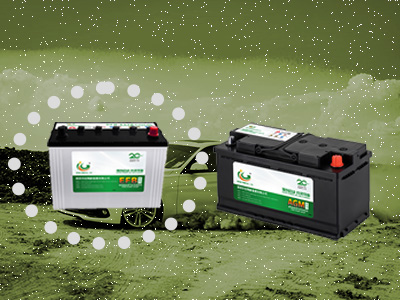
Building upon ordinary batteries, EFB lead-acid batteries employ special polyester fiber separators. These separators can absorb more active substances and prevent the corrosion of substances, thereby enhancing the deep cycle tolerance. The remaining space within the battery case, after removing the plates, partitions, and other solid assembly components, is completely filled with sulfuric acid electrolyte, which is in excess, hence it is referred to as a "liquid-rich" battery.
The internal structure of the AGM lead-acid battery is rather complex. A majority of its electrolyte is adsorbed onto the porous glass fiber separator and is in contact with the electrode through tight assembly technology. Simultaneously, the electrolyte does not fill the entire battery case but leaves space for the cathode-precipitated oxygen to enter the negative electrode. The principle of cathode adsorption is utilized to achieve oxygen recombination and recycling, thereby reducing electrolyte water loss and achieving true maintenance-free operation. On the other hand, the separator technology effectively prevents electrolyte stratification and enhances the deep cycle life.
AGM Start Stop Car Battery 12V 60ah Innovation is on the horizon for lead-acid batteries. Efforts to refine and enhance their characteristics are expected to address existing limitations while maintaining their reliability. This continuous improvement will ensure their relevance in the competitive landscape of battery technologies. The future promises further contributions from lead-acid batteries to our energy storage solutions, as they continue to power various aspects of life in innovative ways.