

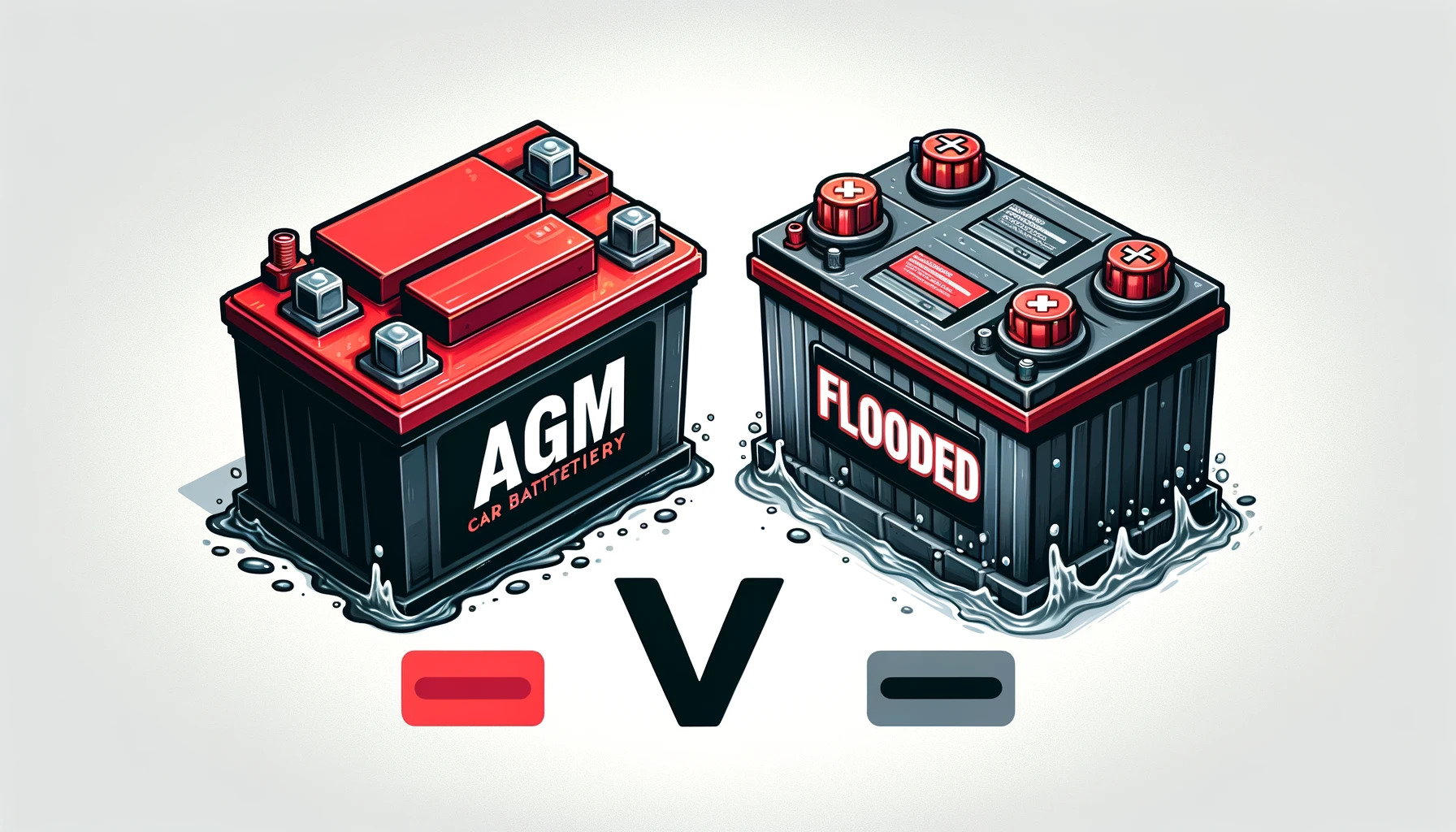
The choice between AGM and flooded batteries encapsulates a broader conversation about efficiency, safety, cost, and environmental impact. Each type presents unique advantages and challenges, making the decision context-specific. Understanding the operational requirements, maintenance capabilities, and safety protocols of your application will guide the selection process, ensuring that the chosen battery type aligns with your specific needs and objectives.
In the dynamic landscape of power storage solutions, both AGM and flooded batteries hold significant roles, catering to a wide array of applications with their distinct characteristics. As we continue to navigate the complexities of modern energy needs, the comparative analysis of these battery types serves as a fundamental resource for informed decision-making, driving forward the pursuit of efficiency, reliability, and sustainability in power storage and management systems.
Understanding AGM Batteries
The Mechanism Behind AGM Batteries
Advantages and Challenges of AGM Batteries
Maintenance-free operation.
High current delivery and long service life.
Can be installed in various orientations without the risk of leakage.
Cons:
Sensitivity to charging conditions, with over and under-charging affecting performance.
Higher initial cost compared to flooded batteries, although they are significantly cheaper than lithium-ion alternatives.
Exploring Flooded Batteries
Functionality of Flooded Batteries
Pros and Cons of Flooded Batteries
Extended lifespan and high ROI.
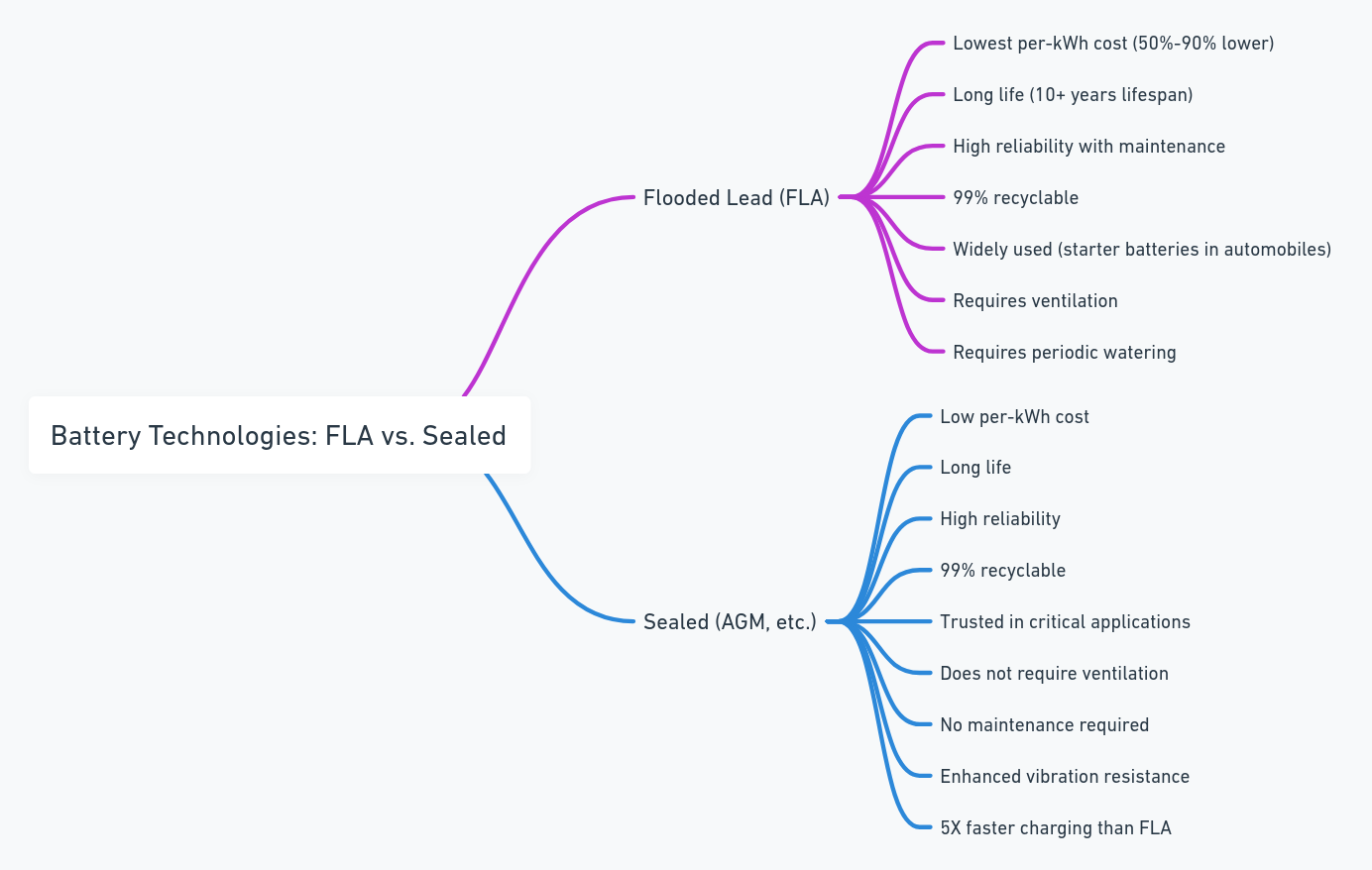
Cost-effectiveness, being 50% to 90% less expensive than alternative chemistries.
Proven reliability with over a century of improvements.
Cons:
Regular maintenance and inspection requirements.
Susceptibility to damage from forceful movement and extreme climates.
Charging and Maintenance
On the other hand, flooded batteries necessitate regular maintenance, including electrolyte level checks and adjustments to ensure longevity and optimal performance. Their charging process is slower, aiming to prevent electrolyte stratification and ensure a thorough charge. This difference underscores the importance of considering operational convenience and maintenance capabilities when selecting a battery type.
Environmental Considerations and Safety
Flooded batteries, while cost-effective, pose higher risks due to the potential for electrolyte spills and gas emissions during operation. They require well-ventilated areas to mitigate these risks, highlighting the need for careful installation and maintenance practices.
Application Suitability
The choice between AGM battery and flooded battery extends beyond technical specifications to application suitability. AGM batteries are ideal for applications that demand reliability, durability, and minimal maintenance, such as in backup power systems, renewable energy storage, and electric vehicles. Their ability to withstand harsh conditions and their maintenance-free nature make them suitable for a wide range of uses.
Flooded batteries, with their extended lifespan and lower cost, are well-suited for stationary applications where regular maintenance can be performed. They are commonly used in automotive starting applications, off-grid renewable energy systems, and heavy-duty industrial equipment, where their high power output and cost-effectiveness are valued.
Cost Considerations
Lifecycle and Longevity
Flooded lead acid batteries, while having a shorter lifespan due to the need for regular maintenance and the potential for faster degradation, can still provide a cost-effective solution when properly maintained. Their design allows for easy inspection and maintenance, which, if performed regularly, can significantly extend their service life.
Technological Advancements and Future Trends
The future of battery technology also sees a growing interest in alternative chemistries, such as lithium-ion, due to their higher energy density and longer lifecycles. However, lead-acid batteries, including AGM and flooded types, remain favored in many applications for their reliability, cost-effectiveness, and established recycling infrastructure.
Making the Right Choice
For applications requiring high reliability, minimal maintenance, and safety in enclosed spaces, AGM batteries are the preferred choice. For cost-sensitive applications where regular maintenance is feasible, flooded batteries offer a viable solution. Regardless of the choice, users should ensure proper maintenance and follow best practices for charging and disposal to maximize battery life and performance.
| AGM | FLOODED |
| Maintenance-free. | No topping up with water required |
| Shock and vibration resistant, ideal forrace cars and motorcycles. | Reliable and durable |
| Spill-proof and can be fitted in almostany position. | Fully recyclable |
| Can handle significantpower demandssuch as Start/Stop vehicles. | Low self-discharge rates. |
| Perform better in all temperatures, eventhe cold. | Good performance at low and high temperatures. |
| Improved charged acceptance. |
FAQs about AGM vs Flooded Battery
When should a flooded or AGM battery be used in different applications?
Conversely, AGM (Absorbent Glass Mat) batteries are preferred for environments where a sealed, maintenance-free option is necessary. They exhibit a lower rate of self-discharge, which makes them excellent for prolonged storage periods without use. Additionally, the integration of a glass mat separator in AGM batteries enhances their resistance to bumps and shakes, making them particularly beneficial for deep-cycle applications in recreational vehicles and boats, as well as for emergency backup power systems, energy storage in renewable setups, and uninterruptible power supplies (UPS).
Why are AGM batteries better than Flooded for Cars?
AGM (Absorbed Glass Mat) batteries are a superior choice compared to traditional flooded lead-acid batteries, especially for modern vehicles with start/stop technology designed to improve fuel economy. Here's why AGM batteries stand out:
Design and Performance: AGM batteries use a fiberglass mat to absorb the sulfuric acid electrolyte, whereas flooded batteries immerse lead plates directly in a liquid electrolyte. This structural difference makes AGM batteries spill-proof and more resistant to vibration, enhancing their durability and safety.
Maintenance and Longevity: AGM batteries are virtually maintenance-free, not requiring the regular water top-ups that flooded batteries do. Flooded batteries can lose water through evaporation, particularly in high or low temperatures, necessitating frequent inspections and maintenance. AGM batteries, on the other hand, have a much lower self-discharge rate and can handle deep cycling and extreme temperatures better, extending their useful life significantly-often two to three times longer than their flooded counterparts.
Safety and Reliability: The design of AGM batteries prevents the leakage of acid, safeguarding sensitive vehicle components and paint from damage. Additionally, the tight packing of the lead plates and the absorbed electrolyte minimizes the risk of plate corrosion and failure.
Efficiency: AGM batteries charge up to five times faster than flooded batteries and are better equipped to handle the high power demands of modern vehicles. Their low internal resistance and ability to deliver high currents on demand make them particularly effective for vehicles equipped with advanced features that require robust power support.
Purity and Quality: Opting for an AGM battery that contains 99.9 percent pure lead can further enhance performance across all temperature ranges, ensuring optimal efficiency and a longer lifespan.
Are AGM batteries safer to use compared to flooded batteries?
What is the construction and maintenance required for flooded batteries?
Do AGM batteries last longer than flooded?
While AGM batteries exhibit superior performance in comparison to flooded batteries, it is noteworthy that lithium-ion batteries still lead in terms of the lowest self-discharge rate, which stands at merely 3.5% per month. Furthermore, lithium batteries can endure approximately 4000 charge cycles, assuming one cycle daily. This translates to a lifespan of about 10 years, thus offering a significant longevity advantage (4000 cycles divided by 365 days approximates to 10.96 years).
Do AGM batteries charge faster than flooded?
AGM (Absorbed Glass Mat) batteries are known for their rapid charging capabilities, significantly outpacing the speed of traditional flooded batteries. Specifically, AGM technology allows these batteries to recharge up to five times faster than their flooded counterparts. Moreover, AGM batteries boast a higher efficiency in terms of lifespan and usable capacity. They are capable of maintaining up to 80% depth of discharge (DOD), which is considerably higher than the 50% DOD typically observed in flooded batteries. This makes AGM batteries a more robust and effective solution for energy storage needs.
Read More:
AGM vs. Lead Acid: The Battery Showdown
How to tell the difference between AGM and GEL Batteries?